
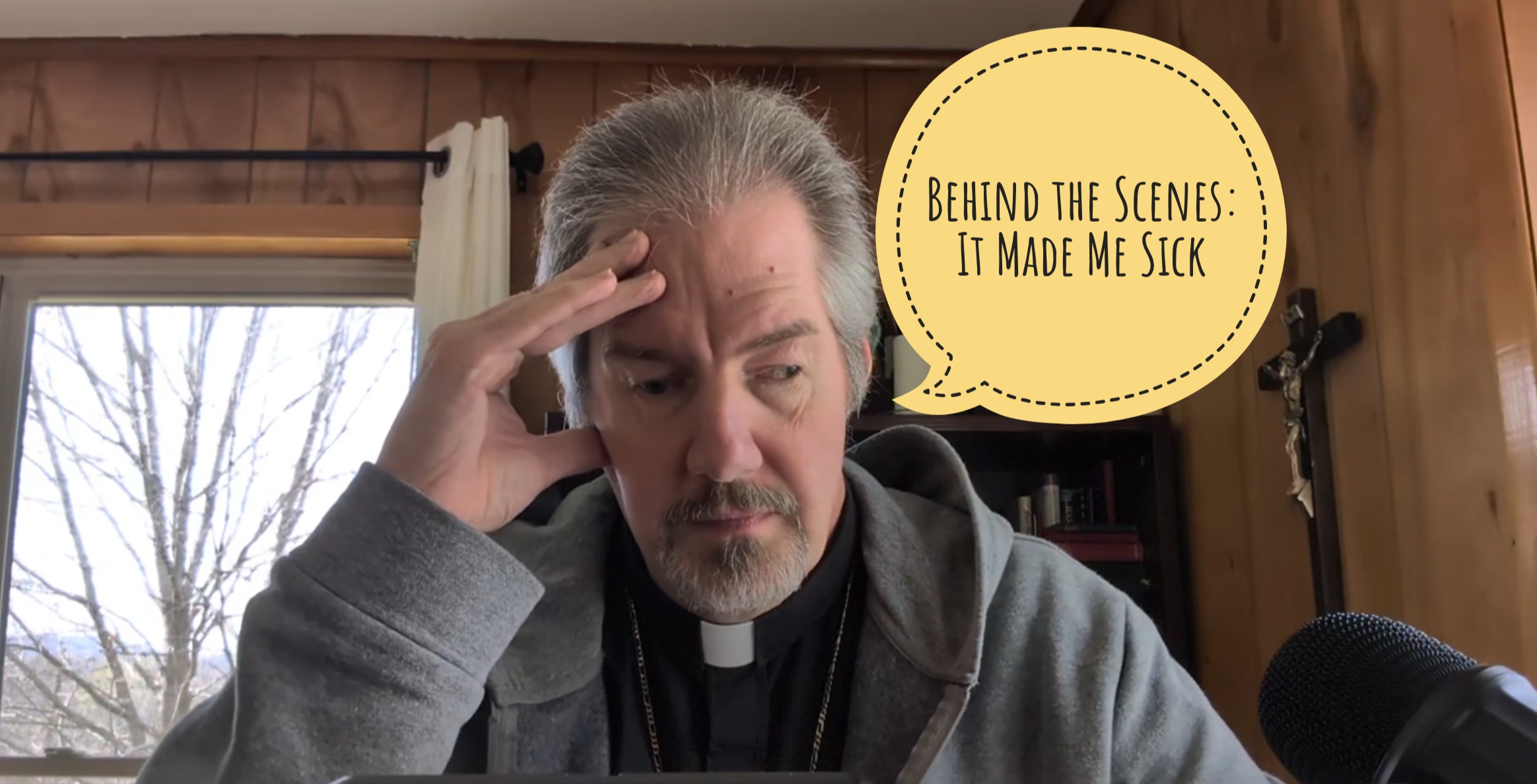
Recording Chapter Three on Lust was different from the others. It wasn’t just intellectually demanding, it was physically and spiritually draining. There’s something about sitting with that kind of material, reading it, repeating it, and reflecting on it aloud, that takes a toll. By the time I finished recording, I felt it in my body. It made me sick to my stomach.
And I think that matters.
Because what I was reacting to wasn’t just a set of words or a political moment. It was the deeper reality those words reveal the casualness with which dignity can be dismissed, the ease with which power can be used to excuse behavior that should never be excused. When you slow down enough to really hear it, to sit with it instead of scrolling past it, it stops being abstract. It becomes personal. It becomes human.
There is a kind of spiritual weight to that. When we confront sin, not in theory, but in its lived and spoken reality, it should unsettle us. If it doesn’t, something in us has gone numb. The discomfort, even the physical reaction, is not a weakness. It’s a sign that conscience is still alive, that something in us still recognizes the difference between what is right and what is deeply wrong.
I won’t pretend this chapter was easy to make. It wasn’t. But it felt necessary. Because if we are going to talk about these things honestly, if we are going to take the Gospel seriously, then we have to be willing to sit in that discomfort long enough to see clearly.
And then, having seen clearly, to choose a better way.